
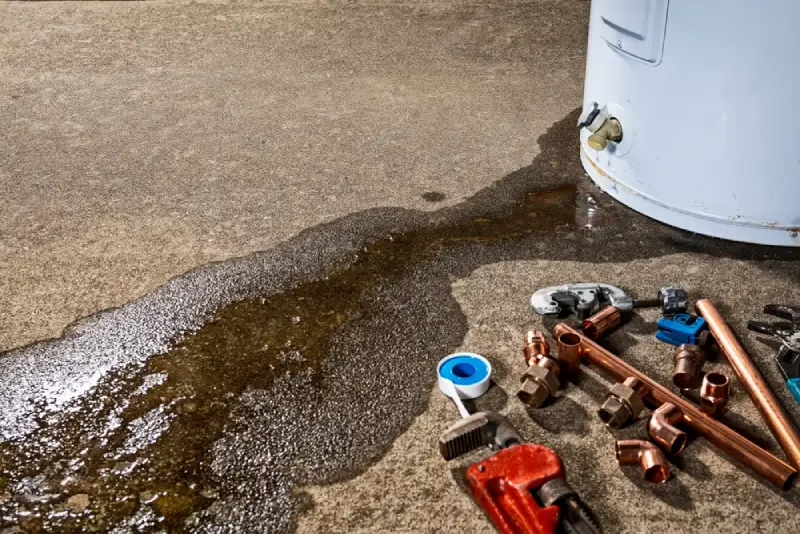
TL;DR: A water heater leaking can damage floors, walls, and nearby belongings, so it is important to act quickly without putting yourself at risk. This guide explains the limited steps homeowners can safely take right away, but finding the source and repairing the leak should always be left to a professional plumber.
- Check for gas, electrical, and scalding hazards before approaching the water heater.
- Turn off the electricity or gas and the cold-water supply only when the controls are safe to reach.
- Contain the water, but leave fittings, valves, pressure problems, and tank repairs to a professional.
- Call a plumber promptly to identify the source.
Finding water around your water heater can be alarming, especially when you don’t know where it is coming from or how quickly the leak could get worse. Even a small amount of water can damage flooring, walls, and nearby belongings if it’s allowed to spread.
The good news is that there are a few safe steps you can take to limit the damage while you wait for a plumber. Just remember that water heaters combine water with gas or electricity, so safety comes first. Homeowners should only take basic damage-control measures they can complete safely. Identifying the source of the leak and making the repair should be left to a professional plumber.
If you need help with a leaking water heater now, schedule a water heater repair or call Bishop Plumbing, Heating and Cooling at (847) 232-0560.
What Should You Do When Your Water Heater Is Leaking?
A leaking water heater can be dangerous, so the first priority is keeping everyone safe. The second is preventing more water from entering the tank and spreading through your home.
Follow these steps in order, but only if you can reach the water heater and its controls safely.
1. Check for Immediate Safety Hazards
Before approaching the water heater, look at the surrounding area.
- Keep children and pets away.
- Do not touch the water. It may be hot enough to cause a burn.
- Do not step into standing water if it may be touching the water heater, an electrical outlet, or exposed wiring.
- If the tank appears swollen, badly corroded, or unstable, stay back and call a plumber.
If you smell rotten eggs, hear hissing near a gas appliance, or otherwise suspect a gas leak, leave the building immediately. Do not touch the water heater, operate a light switch, or try to find the source yourself. Once you are a safe distance away, call Nicor Gas at 888-642-6748 and call 911.
You can find additional instructions on the Nicor Gas safety page.
2. Shut Off the Power or Gas
If there are no signs of an electrical or gas emergency, turn off the power to the water heater before shutting off the water.
For an electric water heater, locate the breaker marked “water heater” in your electrical panel and switch it off. Do not approach the panel if you would need to cross standing water to reach it.
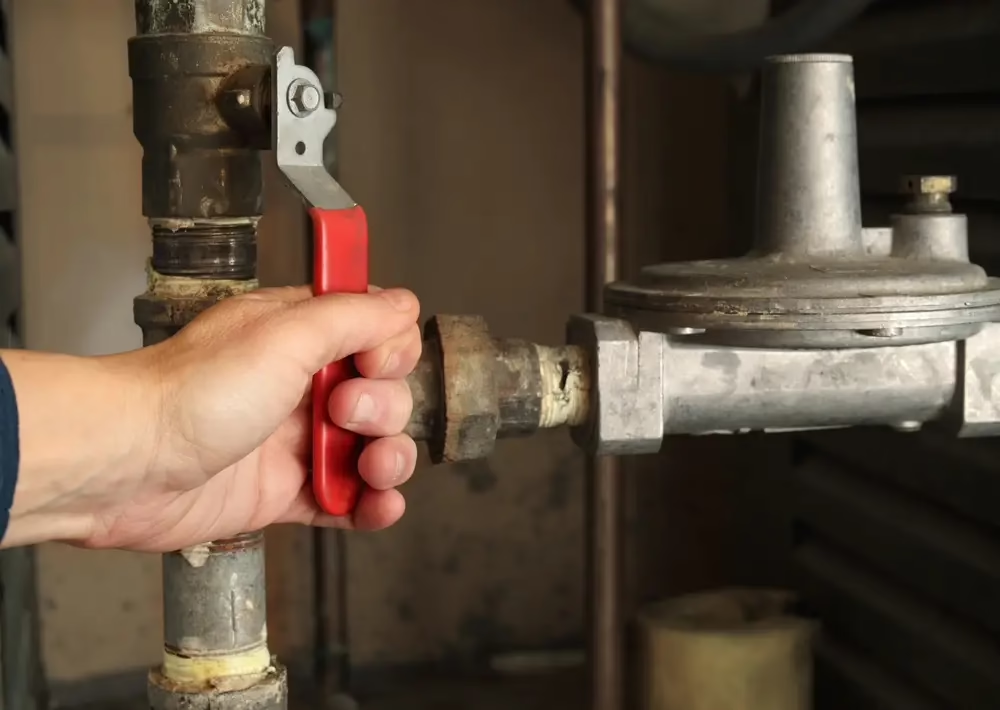
For a gas water heater, turn the unit’s gas control to the OFF position according to the manufacturer’s instructions. If the heater has an accessible manual gas shutoff valve and you know how to use it, close the valve. Do not force a stuck control or handle. If you are unsure what to turn, leave it alone and call for professional help.
Do not turn the water heater back on until a plumber has diagnosed the leak and confirmed that the unit is safe to operate.
3. Shut Off the Water Supply
Next, stop more water from entering the tank. Look for the cold-water pipe entering the top of a standard tank-style water heater. The pipe should have a dedicated shutoff valve nearby.
Turn the valve clockwise until it closes. If it has a lever-style handle, turn the handle so it sits perpendicular to the pipe.
If the valve is stuck, damaged, or surrounded by hot water, do not force it. A broken valve could make the leak worse.
If water continues to flow and you know where your home’s main water shutoff is located, you can turn off the main supply instead.
4. Contain the Leak If You Can Do So Safely
Once the power or gas and incoming water have been shut off, try to keep the water from spreading.
- Place a bucket beneath a small, accessible drip.
- Use towels to absorb water and create a barrier around the affected area.
- Move boxes, furniture, rugs, and other belongings away from the water.
- Keep people away from wet flooring, which may become slippery or unstable.
Do not remove access panels, open unfamiliar valves, or attempt to drain the tank unless a plumber directs you to do so. Water inside the heater may be dangerously hot, and opening the wrong valve can release more water.
5. Call a Plumber
Turning off the water heater and containing the leak can help protect your home, but these steps do not solve the underlying problem. Even when the leak appears minor, it may point to a loose connection, excessive pressure, a failing valve, or internal corrosion.
Call a licensed plumber for a water heater leak so they can find the actual source and determine whether the water heater needs a repair or replacement. If you need prompt help in Mount Prospect or the Northwest Chicago suburbs, schedule service with Bishop Plumbing.
Can a Leaking Water Heater Be Repaired?
It may be possible for your water heater to be repaired following a leak; however, it depends on the source of the leak and the overall condition of the system.
A repair may be possible when the leak comes from:
- A plumbing connection
- A replaceable valve
- An accessible fitting
- Another external component
Replacement may be necessary when:
- The tank is corroded or cracked
- Water is escaping through the tank body or a seam
- The unit has experienced repeated leaks or breakdowns
- The cost of repairing an older unit is difficult to justify
Bishop Plumbing provides complete water heater services for standard tank and tankless systems. Our technicians can inspect the leak, explain what they find, and help you decide whether repair or replacement makes the most sense for your home.
Why a Water Heater Leak Needs a Professional Diagnosis
Water pooling around your water heater tells you that something is wrong. It does not necessarily tell you what failed.
Water that appears to come from the bottom may have traveled down from a connection at the top. A dripping relief valve may be reacting to a pressure problem elsewhere in the system. What looks like a loose fitting may involve corrosion that is not visible from the outside.
A professional plumber can:
- Trace the water to its actual source
- Check the fittings, valves, water pressure, and tank
- Look for tank corrosion or hidden damage
- Determine whether the unit is safe to repair
Shutting down the water heater and containing the water are sensible first steps. Repairing gas, electrical, pressure, or tank components should be left to a trained professional.
Get Help with a Leaking Water Heater
A leaking water heater can turn into a much larger problem if it is ignored. Once you have safely shut off the unit and stopped the incoming water, let Bishop Plumbing identify the cause and recommend the right next step.
Bishop Plumbing, Heating and Cooling has served Mount Prospect and the Northwest Chicago suburbs since 1921. Our licensed team works on gas, electric, standard tank, and tankless water heaters. We are available 24/7 when an urgent plumbing problem cannot wait.
Schedule a water heater repair now or call (847) 232-0560 for immediate assistance.
Frequently Asked Questions About Leaking Water Heaters
Is a leaking water heater an emergency?
A leaking water heater should be treated as urgent because the water can damage your home and may create scalding or electrical hazards. Shut off the unit and water supply if you can do so safely, then contact a plumber. If you smell gas or face an immediate electrical danger, leave the area and contact the appropriate emergency service.
Is it safe to leave a leaking water heater overnight?
You should not leave an active water heater leak unattended overnight. Even a slow drip can spread or worsen without warning. If it is safe to do so, shut off the heater’s electricity or gas, close its cold-water supply, and contain the water before calling a plumber. If you cannot stop the flow or the water is spreading, contact an emergency plumber rather than waiting until morning.
Should I turn off my water heater if it is leaking?
Yes. If the controls are safe to reach, turn off the electricity or gas first. Then close the cold-water supply to the heater. Do not restart the unit until a professional has identified the problem and confirmed that it is safe.
Can I continue using a leaking water heater?
No. Continuing to use a leaking water heater can allow the problem to worsen and increase the risk of water damage. Leave the unit off until it has been professionally inspected and repaired or replaced.
Can a leaking water heater be repaired?
Leaks from some connections, fittings, or replaceable valves may be repairable. If the storage tank is cracked or corroded and leaking, the water heater will generally need to be replaced.
Why is my water heater leaking from the bottom?
Water near the bottom may come from the drain valve, a connection higher on the unit, or a damaged internal tank. Because water can travel down the outside of the heater, a plumber needs to inspect the unit to confirm the source.
How much water damage can a leaking water heater cause?
The amount of damage depends on the size of the leak, how long it continues, and where the water travels. A slow leak can soak into flooring, drywall, cabinets, or insulation before it is noticed. A serious tank failure can release the water already stored inside and continue drawing water from the supply line if it is not shut off. Acting quickly can help limit the affected area and reduce the risk of more extensive repairs.